From Champion Seed West Region Sales Lead Zach Painter
As corn moves through the reproductive stages and begins putting more energy into grain fill, stalk health becomes increasingly important. This is also when Fusarium crown rot can begin to show in the field, which makes late-season scouting even more important. Here’s what you need to know before you get in the field.
What causes Fusarium crown rot?
Fusarium crown rot is caused by soilborne Fusarium fungi that infect the crown and lower stalk. However, the exact species of Fusarium fungi that causes the issue hasn’t been identified. Infection may occur earlier in the season, but symptoms often become more noticeable during late grain fill. Symptoms may be most pronounced in crops that experienced drought, heat, nutrient stress, root injury, compaction or periods of excessive moisture. These stressors reduce the plant’s ability to maintain healthy roots and stalk tissue while also supporting a developing ear.
What are the main symptoms of Fusarium crown rot in corn?
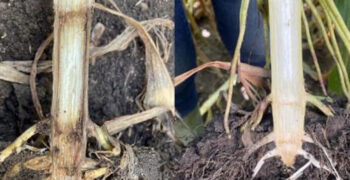
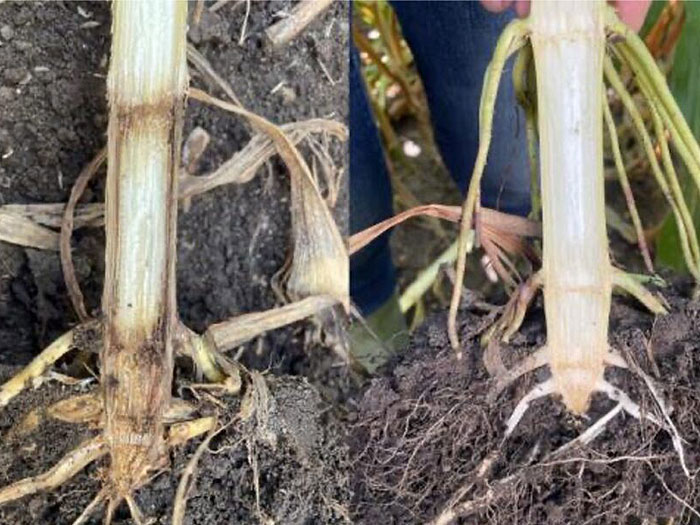
Fusarium crown rot symptoms typically include wilting, yellowing or browning of leaves, and, eventually, complete plant collapse. Later in the season, symptoms can manifest in ghost plants — dead, dried-out stalks — surrounded by healthy crops. Other critical signs of Fusarium crown rot live inside the lower part of the corn stalk and under the soil. The crown and roots may show signs of decay, appearing brown, mushy or water-soaked.
How can you prevent Fusarium crown rot?
When it comes to crown rot, prevention is the best strategy. Here’s what we recommend:
- Improve soil drainage and avoid overwatering: Fungi love moisture. Fusarium fungi are no exception. Soil drainage can make the area less habitable for spread.
- Consider fungicide, but only at the right time: Late-season application of fungicide likely won’t help you combat Fusarium crown rot. Preventive application is likely to be more effective but is most often recommended for severe cases.
- Rotate crops and keep fields clean after infection: Try not to plant susceptible crops in the same area year after year, as the Fusarium fungi can live on in plant debris and soil. You should also clean up any affected areas and destroy the debris to prevent spreading the infection.
Why scout for Fusarium crown rot late in the season?
By the time significant lodging occurs, management options are limited. However, scouting during late grain fill allows us to identify fields that are beginning to lose stalk integrity before harvest. If a field has significant crown rot or is failing stalk-strength tests, consider moving it higher on the harvest priority list. A field standing well today may look very different after several weeks of dry-down, wind and late-season weather.
Late-season scouting also provides valuable information for next year. Digging and splitting plants can help determine whether you’re dealing strictly with disease or whether fertility, drainage, compaction, root development or other stresses are contributing to poor stalk health. If fields have Fusarium crown rot, it’s essential to remove and destroy infected plant debris.
Already thinking about planting next year?
A Champion Seed dealer can help you match varieties to what you’re seeing in your fields. Find your local connection here.