Background:
Red crown rot (RCR) is caused by the fungus Calonectria ilicicola, which causes stems and roots to rot. This disease first emerged on the southeast coast of the United States in 1972. It’s now made its way to the Midwest, with the first spotting of it in Illinois in 2018.
Symptoms:
Calonectria ilicicola overwinters in the soil as microsclerotia. They can survive several years without a host and be released locally with the help of the wind, farm equipment, etc. The infection normally occurs under warm, wet conditions, and plants are very susceptible during warm, wet weather following the R3 stage.
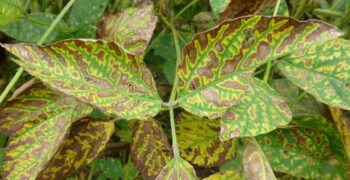
RCR begins on the foliar level with light green to yellow blotches growing in between the veins on leaves. Then you will start to see reddish discoloration on the lower stems. After periods of intense moisture levels during the late growing season, these discolored areas will become flush with white hyphae and reddish-to-brown spore-bearing structures.
The foliar symptoms can be mistaken for soybean sudden death syndrome (SDS), brown stem rot or Southern stem canker. The stem symptoms can be mistaken for charcoal rot, Rhizoctonia root rot, and Phytophthora stem rot.
Management:
- Delayed planting can result in unfavorable soil temperatures for root infections.
- Rotate out of beans for at least two years, as it can help reduce the disease-causing inoculum.
- Improve drainage.
- Manage pathogenic nematodes and root-feeding insects.
Source: Red Crown Rot of Soybeans: Crop Protection Network
USDA Photo by Lance Cheung