Learn how Champion Seed blends soybean varieties to help boost average soybean yields despite yield-limiting factors.
Background: Red crown rot (RCR) is caused by the fungus Calonectria ilicicola, which causes stems and roots to rot. This disease …
By Soybean Production Manager Rob Thomas Seeds are living organisms. So perfection is difficult to achieve. But we’re going to …
Background: Soybean gall midge is a pest that infects field edges on larger fields. Smaller fields could see a field-wide …
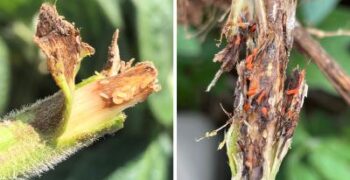
Background: Stink bugs are a group of insects known for their distinctive shield-shaped bodies and the foul odor they emit …
Background: Sudden death syndrome (SDS) is caused by the soilborne fungus Fusarium virguliforme. Foliar symptoms of SDS are results of …
Background: Iron deficiency chlorosis (IDC) is a physiological disorder in soybeans caused by iron deficiency in the plant. This can …
Background: Septoria brown spot is caused by the fungus Septoria glycines. This disease is the most common foliar disease in …
Background: White mold is also known as Sclerotinia stem rot. This disease is prevalent in cooler growing regions. White mold …
We’re starting to see the results of a wet spring, especially all the rain we had in May. Here, we outline what you should look for throughout the growing season during years like this and provide some tips for managing crop challenges to meet your yield potential.
Soybean cyst nematode (SCN) is the parasite that causes the most soybean yield loss in the U.S., according to the Crop Protection Network. In 2022 it accounted for over 70% of the total yield loss in soybeans across the northern states.